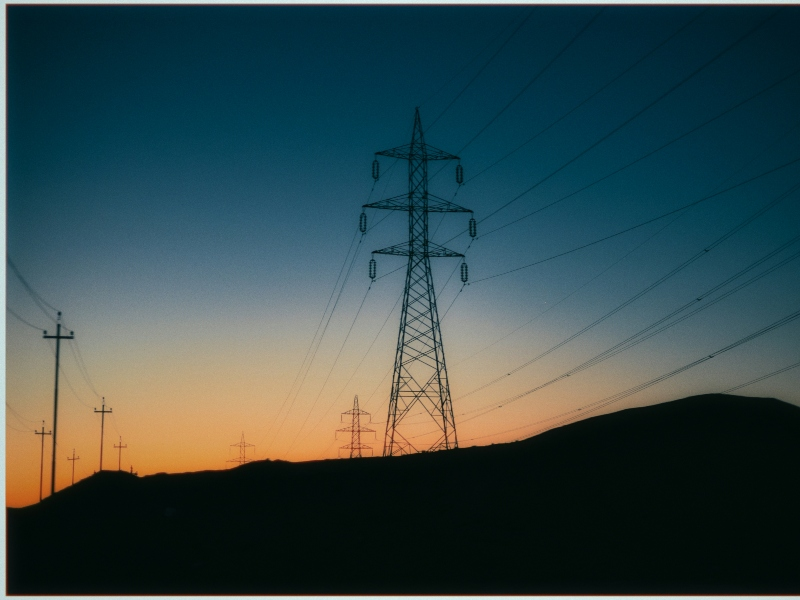
Beyond Solar Panels Where the Electricity Infrastructure Opportunity Is Growing
Global electricity demand is entering a period of sustained growth, and the biggest opportunities may not be in producing electricity but in the infrastructure needed to deliver and manage it. The International Energy Agency (IEA) expects global electricity consumption to grow by an average of 3.6% a year from 2026 to 2030, adding about 1,100 TWh annually. That is significantly faster than the 2.8% average growth recorded in the previous decade.
This shift is being driven by data centers, artificial intelligence, industrial electrification, electric vehicles, air conditioning and heat pumps. The result is a growing mismatch between new sources of electricity and the networks needed to connect them. The IEA says more than 2,500 GW of renewable, storage and large-load projects are currently stalled in grid connection queues worldwide.
That bottleneck creates a different kind of energy market. Solar panels and wind turbines remain important, but businesses supplying transformers, cables, switchgear, cooling equipment, batteries, power electronics and energy-management systems are becoming increasingly important to the electricity economy.
The investment numbers underline the scale of the opportunity. The IEA estimates global energy investment will reach $3.4 trillion in 2026. Around $2.2 trillion is expected to go toward clean energy, including grids, storage, renewables, nuclear, efficiency and electrification. Electricity supply and infrastructure alone are expected to attract nearly $1.6 trillion, rising to about $2 trillion when end-use electrification is included. Grid investment is projected to approach $550 billion.
For businesses, one of the clearest opportunities is grid equipment. Transformers step electricity up or down to usable voltages and are essential at almost every stage between power generation and the final customer. The IEA estimates that annual grid investment needs to rise by roughly 50% by 2030 from today’s level of about $400 billion. It also notes that building new grid infrastructure can take five to 15 years, considerably longer than many generation and data center projects.
This creates opportunities not only for large manufacturers but also for engineering companies, component suppliers, maintenance firms and distributors. Established names include Hitachi Energy, Siemens Energy, Schneider Electric and Eaton, with product ranges covering transformers, switchgear, substations and power distribution equipment. Hitachi Energy, for example, offers its TXpert ecosystem for monitoring and digitally managing transformers, including equipment from different manufacturers.
Data centers add another layer to the opportunity. A IEA expects electricity consumption by data centers to more than double to around 945 TWh by 2030, with AI as an important driver. In the United States, data centers are expected to account for about half of electricity demand growth through 2030.
Electricity is only part of the problem at these facilities. High-density computing generates large amounts of heat, making cooling a critical part of data center design. Liquid cooling is therefore gaining attention alongside conventional air cooling. Direct-chip cooling, rear-door heat exchangers and immersion cooling are among the approaches being deployed. Vertiv’s Liebert liquid-cooling system and Schneider Electric’s reference design for liquid-cooled AI infrastructure are examples of commercial technologies in this market.
Another emerging business area is energy management software. Companies increasingly need systems that can monitor electricity consumption, control equipment, shift loads and coordinate solar generation, batteries and grid power. This is particularly relevant to factories, warehouses, hospitals, shopping centers and large office buildings where reducing peak electricity demand can have a meaningful financial effect.
Energy storage is also moving beyond large utility projects. Commercial and industrial customers can use batteries for backup power, peak-demand management and greater flexibility in how they consume electricity. The IEA expects global battery-storage investment to exceed $100 billion in 2026.
Asia is likely to be a major market for these technologies. Emerging markets and developing economies are expected to account for nearly 80% of additional global electricity consumption through 2030. China remains the largest individual contributor, while India and Southeast Asia are expected to become increasingly important sources of growth. Southeast Asia is seeing rising electricity use from cooling, industry, electric mobility and data centers.
For companies in developed markets, this creates opportunities in equipment distribution, electrical contracting, industrial automation, solar-plus-storage systems, cooling, maintenance and energy-management services. Local businesses may not need to manufacture sophisticated equipment themselves. Becoming an authorized distributor, system integrator or service provider can offer a more realistic entry point.
There is, however, an important qualification. The electricity infrastructure market contains many highly technical products, and specifications cannot be judged simply by comparing prices. Buyers should verify manufacturer certifications, applicable IEC or local standards, warranty terms, testing documentation, after-sales support and the authenticity of equipment. The rapid growth of demand can also attract counterfeit products and suppliers making misleading claims about capacity, efficiency or certification.
The broader business message is becoming clearer. The growth of electricity demand is creating a market that extends far beyond solar modules and wind turbines. Companies that help electricity travel farther, handle larger loads, remove heat, store power and use it more efficiently are becoming an increasingly important part of the energy economy.
For entrepreneurs, manufacturers, distributors and investors, this opens up a wide value chain. The next phase of electrification is not simply about generating more electricity. It is about building the infrastructure that allows businesses and consumers to actually use it.