China’s CXMT Starts Mass Production of Fifth Generation DRAM
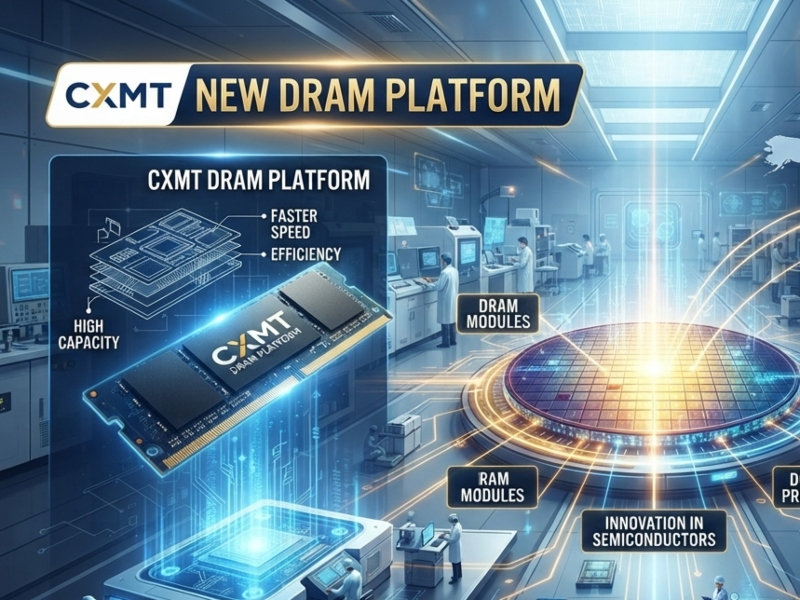
China’s memory-chip maker ChangXin Memory Technologies, or CXMT, has moved its fifth-generation DRAM technology platform into mass production, marking another step in the country’s effort to build a stronger domestic semiconductor supply chain. The company announced the milestone at the World Manufacturing Convention in Hefei on September 20, along with two new 24-gigabit LPDDR5X products that are already in mass production.
DRAM, or dynamic random-access memory, is the working memory used by smartphones, computers and other electronic devices to temporarily hold data while applications are running. LPDDR5X is a low-power version designed particularly for mobile devices and thin portable electronics. In practical terms, CXMT’s latest development gives electronics manufacturers another potential source of memory chips alongside established suppliers such as Samsung Electronics, SK hynix and Micron Technology.
The new technology, known as the G5 platform, uses a manufacturing technique called quadruple patterning to create much smaller structures in the memory array. CXMT says the active-area half-pitch has been reduced to 11.95 nanometres. It also reports a 45:1 capacitor aspect ratio and a core functional area height of 6,762 nanometres. These are highly technical measurements, but their commercial significance is easier to understand: more memory can potentially be packed into a smaller area while improving manufacturing efficiency.
One of the more important figures for manufacturers is the number of usable memory dies that can be produced from a silicon wafer. CXMT says its G5 platform can produce at least 50% more dies per wafer than its fourth-generation platform, based on an 8Gb die comparison. Higher output per wafer can help reduce the manufacturing cost of each chip, although actual commercial savings will depend on yields, production scale and other manufacturing costs.
The company has also introduced two 24Gb LPDDR5X products based on G5. CXMT says both provide 50% more capacity per die than equivalent previous-generation products and are being produced in 496-ball and 245-ball packages. They are intended for smartphones and other portable consumer electronics.
The timing is significant because CXMT has already been gaining ground in the global DRAM market. Counterpoint Research’s data reported in September put CXMT’s second-quarter 2026 revenue share at 10%, up from 4% a year earlier and 8% in the previous quarter. Samsung held 39%, SK Hynix 26% and Micron 25%, meaning the three established leaders still controlled the overwhelming majority of the market.
That makes the G5 launch more than a technology announcement. For Chinese smartphone, computer and electronics manufacturers, a strong domestic DRAM supplier can provide another option when they negotiate memory supply and manage price or availability risks. It also supports China’s broader efforts to reduce dependence on overseas semiconductor suppliers.
There are signs that Chinese memory is attracting attention outside of China as well. Reuters reported in February, citing a Nikkei Asia report, that HP and Dell were considering or qualifying CXMT DRAM products amid tight global memory supplies. Reuters noted at the time that it could not independently verify the report. Acer and Asus were also reported to be exploring Chinese-made memory through their manufacturing partners.
For buyers and technology companies, however, mass production should not automatically be interpreted as worldwide commercial adoption. CXMT’s announcement confirms that the G5 platform and its two LPDDR5X products have entered production, but the company has indicated that products based on the new platform have not yet reached large-scale sales. Customer qualification, production yields, reliability testing and long-term supply consistency will determine how quickly the technology gains market share.
The competitive landscape also remains strong. Samsung, SK hynix and Micron have extensive manufacturing experience and broad product portfolios covering conventional DRAM, mobile memory and high-bandwidth memory used in artificial intelligence and data-center systems. Buyers can already find LPDDR5X products from these established suppliers, while CXMT is seeking to expand its position from a rapidly growing fourth supplier.
For businesses sourcing electronics, development could eventually create more choice and improve supply-chain flexibility. Smartphone and laptop manufacturers may have another supplier to evaluate, while component distributors and device assemblers could benefit from a wider range of sourcing options. But companies should verify the exact memory supplier, capacity, speed, package and certification of components rather than relying only on a device listing or seller description.
This is particularly important in markets where memory chips and electronic components are frequently sold through third-party channels with misleading specifications or questionable authenticity. Established manufacturers such as Samsung, SK hynix, Micron and CXMT should be distinguished from distributors or retailers that merely claim to sell their products.
CXMT’s G5 milestone therefore matters less because it immediately changes the global memory market and more because it shows how quickly China’s domestic DRAM industry is moving up the technology and production curve. If CXMT can translate its new process into stable yields, competitive pricing and wider customer adoption, Chinese electronics manufacturers will have a stronger domestic memory option, while global buyers will have another supplier to consider in an increasingly important part of the semiconductor supply chain.
SEO description:
CXMT’s new DRAM platform could expand memory supply and strengthen China’s chip industry.
Tags: CXMT, DRAM, LPDDR5X, memory chips, semiconductors, China technology, smartphones, chip manufacturing