Why Some Manufacturers Are Moving Production Back to China
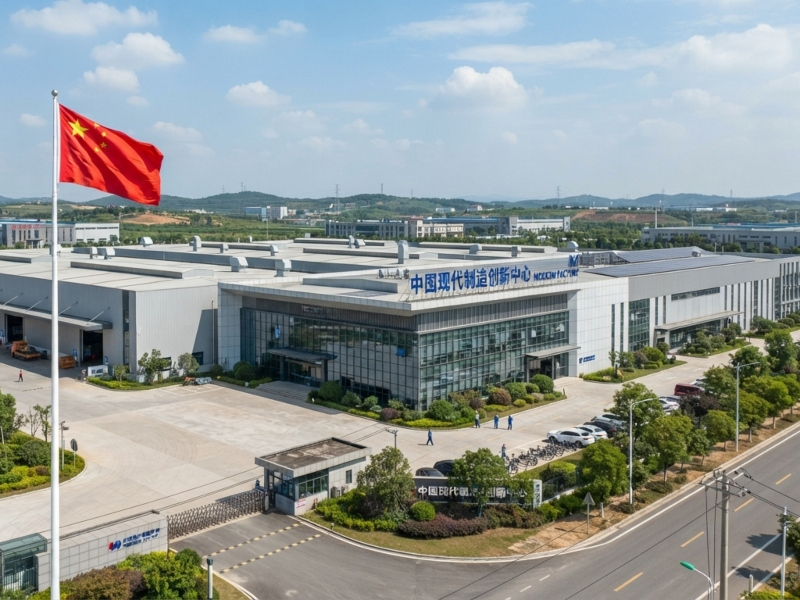
For much of the past decade, global manufacturers have tried to reduce their dependence on China. Rising Chinese wages, US-China trade tensions and concerns about supply-chain concentration have pushed companies toward Vietnam, India, Mexico and other manufacturing locations. But the expected shift has proved more complicated than many companies anticipated. Recent reporting shows that some manufacturers are now moving production back to China or scaling back plans to relocate, largely because the cost and complexity of reproducing China’s industrial ecosystem have been higher than expected.
The change does not mean companies are abandoning the China Plus One strategy. Instead, manufacturers are becoming more selective about what they move and what they keep in China. China Plus One generally means maintaining a Chinese manufacturing base while adding another production location to reduce geopolitical, tariff or supply-chain risk. The biggest problem for companies leaving China is that a factory is only one part of a manufacturing system.
China has developed dense industrial clusters in which component suppliers, tooling companies, machinery producers, logistics firms and technical specialists can operate close to one another. This matters particularly for products that require hundreds or thousands of components. A factory in another country may have cheaper labor, but if it has to import many of its components from China, the apparent savings can shrink quickly.
China has also become increasingly important as a supplier to other manufacturers. McKinsey reported that Chinese exports of intermediate goods increased 27% year-over-year in the first half of 2026, accounting for almost three-quarters of China’s export growth during the period. That suggests China’s role is not simply that of a producer of finished consumer goods. It is also deeply embedded in the supply chains of factories operating elsewhere.
Labor is another consideration. Low wages were once one of China’s strongest manufacturing advantages, but the country’s importance today is less about basic assembly costs and more about accumulated manufacturing expertise. Experienced engineers, technicians, tool specialists and production managers can be difficult to replace quickly in a new location.
Equipment creates another layer of dependence. Machinery, molds, production equipment and spare parts may still come from China even when the final assembly has been moved to Vietnam, India or another country. Companies can therefore reduce their direct manufacturing exposure to China while remaining dependent on Chinese industrial suppliers.
The economics become clearer when companies calculate total land costs rather than simply comparing factory wages.
Total landed cost includes components, freight, tariffs, inventory, quality problems, production delays and the cost of managing additional suppliers. A factory with lower wages can become more expensive if it requires longer supply chains, larger inventories or frequent technical intervention.
Tariffs also make the calculation more complicated. The United States continues to adjust its trade policies and investigate manufacturing practices across multiple economies, including China, Vietnam, India, Malaysia, Thailand, Indonesia and Mexico. This means that companies cannot assume that moving production from China automatically eliminates trade policy risk.
China’s industrial depth is particularly difficult to reproduce in sectors with complex supply chains. The International Energy Agency, for example, estimates that China accounts for around 85% of global solar and 80% of lithium-ion battery supply-chain production capacity, with even higher shares in areas such as photovoltaic wafers and anode materials.
This does not mean China is the cheapest manufacturing location for every product. Vietnam, India, Mexico and other countries continue to attract substantial investment, particularly where labor costs, trade access or geographical diversification offer advantages.
The more realistic model is therefore a hybrid one. Companies may manufacture products for the Chinese market in China, keep sophisticated component production there, and establish additional assembly capacity elsewhere for customers in North America or Europe. Others may maintain Chinese suppliers while adding a second manufacturing country as insurance against disruption.
For manufacturers and sourcing managers, the lesson is straightforward: relocation should not be based on wages or tariffs alone. Companies need to examine the entire supply chain, including supplier depth, skilled labor, energy reliability, logistics, tooling, quality control, inventory requirements and market access.
China’s manufacturing advantage was built over decades. Its factories are supported by an extensive network of suppliers and industrial services that cannot easily be recreated by moving one production line to another country.
The current movement back toward China is therefore less a reversal of globalization than a correction in how companies calculate manufacturing costs. Diversification remains valuable, but for many products, completely replacing China’s industrial ecosystem can cost more than expected. The emerging strategy is not “China or elsewhere.” It is increasingly about deciding which parts of the supply chain should remain in China and which should be diversified.