China’s popular electric Car
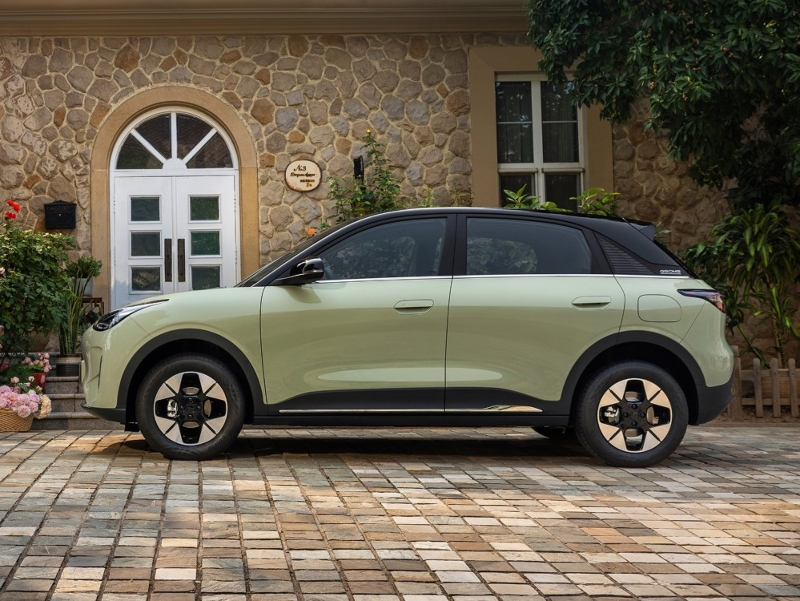
The Geely Galaxy Xingyuan has become one of the clearest examples of how affordable electric cars are changing the automobile market. In 2025, the small electric hatchback sold 465,775 units in China, making it the country’s best-selling passenger vehicle and its best-selling new-energy vehicle. The Tesla Model Y, despite its much higher price and strong global reputation, sold 425,337 units in the same market.
The result is significant because the Xingyuan is not a premium car. It is a relatively small urban EV designed around affordability and everyday use. That approach is becoming increasingly important as consumers face high fuel costs and manufacturers compete to make electric vehicles accessible to a much larger part of the market.
What is the Xingyuan: Geely is one of China’s largest automobile manufacturers, while Galaxy is its new-energy vehicle brand. The Xingyuan was introduced in October 2024 and quickly became a major seller. In international markets, the same basic model is sold as the Geely EX2. Geely has already introduced the EX2 in markets including Brazil, Indonesia and Thailand, while expanding its international EV business.
The car’s success is largely connected to its price. The updated 2026 Xingyuan was introduced in China with official prices starting at 64,800 yuan, while a promotional starting price of 61,800 yuan was announced for the entry version. Higher versions offer longer driving ranges.
That puts the Xingyuan in a very different category from the Tesla Model Y. The Model Y is a larger SUV aimed at a different part of the market. The Xingyuan focuses on affordable urban transportation, where low purchase cost, manageable size and reasonable running costs matter more than high performance or long-distance touring.
Practical size: Although it is a small hatchback, the Xingyuan is not a two-seat city car. It has five seats and a 2,650 mm wheelbase, giving it useful interior space for a family-oriented urban vehicle. Its rear-wheel-drive layout and multi-link rear suspension are also unusual for an inexpensive electric car. Geely says the EX2 was designed as a B-segment urban EV with a focus on space, technology and everyday usability.
Range and charging: The updated Xingyuan is offered with three CLTC range options of 310 km, 410 km and 480 km, depending on the version. CLTC is China’s vehicle testing cycle and generally produces higher range figures than some other testing standards, so buyers should not assume that a 480 km CLTC rating will translate into 480 km in real-world driving.
Geely’s overseas EX2 specification also highlights fast charging, with the company stating that the battery can charge from 30% to 80% in about 25 minutes. Equipment and specifications can vary between countries, so buyers should check the local version rather than relying on Chinese-market specifications.
Why sales matter: The Xingyuan’s performance shows where China’s EV market is heading. In 2025, the Wuling Hongguang Mini EV ranked second among new-energy passenger vehicles with 435,599 sales, while the Tesla Model Y ranked third with 425,337. The BYD Seagull followed with 310,956. The figures show that affordable electric cars are not a niche product in China. They are competing directly with some of the country’s most established models.
The trend has continued into 2026. During the first eight months of the year, the Xingyuan recorded 266,116 retail sales in China, ahead of the Tesla Model Y at 226,931. In August alone, the Xingyuan sold 39,651 units and ranked first in China’s passenger-car market according to CPCA-based retail data.
The wider EV market: The Xingyuan is not the only affordable electric car worth watching. The BYD Seagull, Wuling Hongguang Mini EV and BYD Yuan Up are important competitors in China’s value-oriented EV market. Tesla remains a major player at the higher end, while models such as the BYD Dolphin offer another approach to affordable electric mobility.
China’s success with these cars also has implications for other Asian markets. As battery technology improves and manufacturers expand overseas, small EVs that were initially designed for China’s highly competitive market are increasingly being adapted for other countries. Geely’s international sales rose sharply in the first half of 2026, and the company says the EX2 has continued expanding overseas.
What buyers should watch: Low prices can sometimes create confusion in fast-growing EV markets. Buyers should verify the exact battery capacity, range standard, charging capability, safety equipment, warranty and after-sales support of the locally sold version. Advertisements using specifications from another market can be misleading because equipment and battery options may differ.
The bigger lesson from the Xingyuan is not that one inexpensive EV will replace Tesla or every gasoline car. It is that electric mobility is moving into a much broader price range. The next stage of EV growth may depend less on expensive technology showcases and more on simple cars that ordinary families can afford, charge easily and use every day.